Delving into the intricate world of high net worth individuals, we find ourselves entwined in a complex narrative of wealth and finance. At its core, high net worth definition revolves around a singular yet profound concept: net worth. A simple enough notion, yet one that holds the key to unraveling the enigma that surrounds the lives of these individuals. In this realm, the distinction between net worth and other financial metrics, such as income, serves as a fundamental differentiator.
As we embark on this odyssey, examples of people who meet the criteria for high-net-worth individuals will provide us with a tangible understanding of this concept.
The significance of high net worth thresholds cannot be overstated, as it serves as a benchmark for measuring an individual’s financial prowess. Furthermore, the tax implications and wealth management strategies employed by these individuals further underscore the complexity of their financial landscape.
Understanding the Concept of High Net Worth Individuals
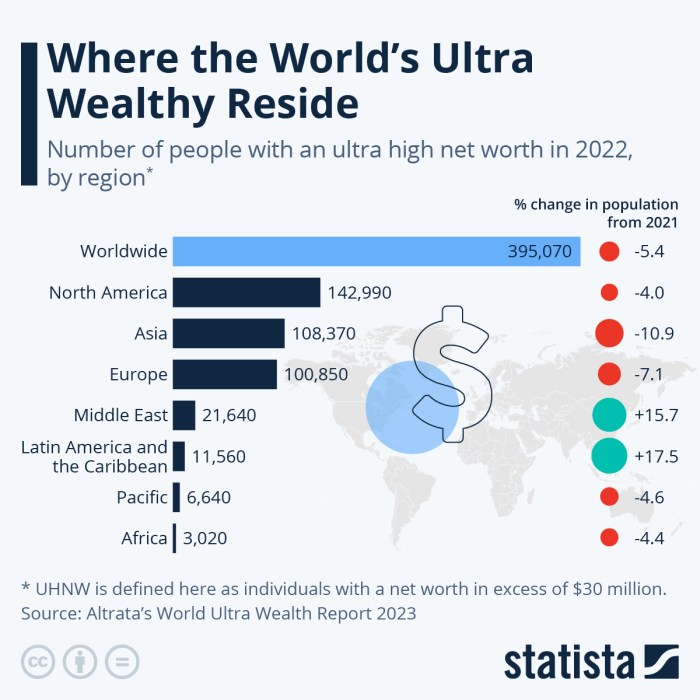
High net worth individuals (HNWIs) are a significant group when it comes to understanding the world of wealth and finance. Their financial influence and spending power make them an important demographic for businesses and economists alike. In the United States, for instance, the HNWI community holds approximately 47 percent of the total wealth, with their investment decisions and lifestyles reflecting a considerable impact on the national economy.To define high net worth individuals, let’s look at the significance of net worth in this context.
Net worth is the difference between the total assets and liabilities of an individual. It represents their financial position and is a more comprehensive indicator of their wealth than income alone. High net worth individuals generally have a net worth of $1 million or more, although this figure can vary widely depending on the source and criteria used.This distinction between net worth and income is crucial because it highlights the importance of financial stability and security in achieving high net worth status.
Having a high income does not necessarily translate to a high net worth, as an individual’s income can change from one year to another. Net worth, on the other hand, provides a more stable and accurate measure of an individual’s financial well-being.
Cases of High Net Worth Individuals
There are several examples of people who meet the criteria for high net worth individuals, each with their unique stories and financial paths.In the United States, the top 10% of earners, which includes individuals with high net worth, account for approximately 76.5% of the country’s total income. Notable examples of high net worth individuals include business magnates like Bill Gates and Mark Zuckerberg, who have built their fortunes through innovative technologies and entrepreneurial ventures.
Other notable HNWIs include entertainment industry professionals, celebrities, and athletes who have leveraged their talents and platforms to accumulate significant wealth.In Asia, countries like China and Singapore boast vast populations of high net worth individuals, many of whom have made their fortunes in the realms of technology, finance, and real estate. For instance, Jack Ma, co-founder of Alibaba Group, has a net worth estimated to be over $40 billion, making him one of the wealthiest individuals in Asia.
Similarly, Singaporean business magnate Ng Chee Yuen, founder of SIA Engineering, has a net worth of over $2.5 billion.
Characteristics of High Net Worth Individuals
High net worth individuals can be characterized by certain traits and financial behaviors, including:High income: While not a guarantee of high net worth, individuals with high income tend to accumulate wealth more quickly.Financial literacy: HNWIs typically possess a high level of financial knowledge and literacy, enabling them to make informed decisions about investments and asset allocation.Investment savvy: High net worth individuals tend to invest their wealth strategically, often seeking high-return investments such as stocks, real estate, and private equity.Risk tolerance: HNWIs often exhibit a higher risk tolerance, investing in assets that offer higher potential returns but also carry higher risks.Financial planning: High net worth individuals typically have a clear financial plan in place, which includes long-term goals, risk management strategies, and investment goals.
Impact of High Net Worth Individuals on the Economy
High net worth individuals can have a significant impact on the economy, both positively and negatively. On the positive side, their high levels of spending and investment can drive economic growth, create jobs, and stimulate innovation. However, their financial influence can also create social and economic imbalances, as high-net-worth individuals may benefit disproportionately from government policies and subsidies.In addition, the concentration of wealth among HNWIs can lead to reduced social mobility and economic inequality.
Governments and policymakers must strike a balance between catering to the needs of high-net-worth individuals while also addressing the financial challenges faced by lower-income households.
High Net Worth Taxation and Wealth Management Strategies

High-net-worth individuals and their families face a multitude of complex tax implications and financial challenges. As a result, effective wealth management strategies become imperative to safeguard their assets, reduce tax liabilities, and ensure a smooth transfer of wealth to future generations. This involves a deep understanding of tax laws, strategic financial planning, and informed decision-making.For high-net-worth individuals, tax compliance is a significant concern.
A single misstep can lead to substantial tax penalties, fines, or even litigation. Understanding the tax implications of various financial transactions, investments, and business ventures is crucial to minimizing tax burdens. Moreover, it is essential to maintain accurate and detailed financial records, as tax authorities can scrutinize every aspect of an individual’s financial history. A well-informed tax strategy can help mitigate these risks and ensure compliance with tax laws.
Tax Implications for High-Net-Worth Individuals
High-net-worth individuals are subject to various taxes, including income tax, capital gains tax, and estate tax. Tax-efficient investment strategies and planning can help minimize the tax burden. The tax rates for high-net-worth individuals are usually higher than those for lower-income individuals, as the tax system is progressive. This means that as income increases, the tax rate also increases, making it essential for high-net-worth individuals to optimize their tax planning.
- Avoiding income tax penalties: Tax-efficient investment strategies such as tax-loss harvesting, which involves selling investments at a loss, can help minimize tax liabilities.
- Minimizing capital gains tax: Long-term capital gains, realized after one year or more of holding an investment, are generally taxed at a lower rate than short-term gains.
- Planning for estate tax: High-net-worth individuals can reduce their estate tax liability by gifting assets to loved ones or charitable organizations, setting up trusts, and implementing other estate planning strategies.
- Understanding tax credits: High-net-worth individuals may be eligible for tax credits, such as the earned income tax credit (EITC), which can significantly reduce their tax liability.
High-net-worth individuals can also leverage tax-advantaged accounts such as 401(k)s, IRAs, and Roth IRAs to minimize tax liabilities. These accounts offer tax benefits that can help grow wealth over time.
Asset Protection and Wealth Management Strategies, High net worth definition
Wealth management involves protecting and growing one’s assets, as well as planning for the future. This includes creating an asset protection plan to safeguard wealth against potential risks such as lawsuits, creditors, or even natural disasters. A comprehensive wealth management strategy also involves diversifying investments, setting up trusts, and implementing other risk management techniques.
Financial Planning and Consulting for High-Net-Worth Individuals
Effective financial planning is critical for high-net-worth individuals to ensure they are on track to meet their financial goals. A financial advisor or wealth manager can provide personalized guidance on investment strategies, tax planning, and estate planning. They can also help identify areas of risk and recommend solutions to mitigate them.Financial planning involves assessing an individual’s financial situation, setting realistic goals, and developing a tailored plan to achieve success.
This includes identifying sources of income, analyzing expenses, and allocating assets efficiently.
- Analysing risk tolerance: Understanding an individual’s risk tolerance is essential to developing a suitable investment strategy.
- Setting financial goals: High-net-worth individuals must set clear financial goals, whether it’s saving for retirement, wealth transfer, or estate planning.
- Creating a financial plan: A financial advisor or wealth manager can help develop a comprehensive financial plan that addresses tax planning, estate planning, and asset protection.
- Monitoring and adjusting: A financial plan is not a one-time process; it requires ongoing monitoring and adjustments to ensure it remains relevant to one’s changing financial circumstances.
A professional wealth manager or financial advisor can provide expert guidance on high-net-worth tax planning, asset protection, and financial planning. They can help high-net-worth individuals navigate complex financial landscape and make informed decisions to safeguard their wealth.
High Net Worth Lifestyle
High net worth individuals are often seen as the epitome of luxury and excess, but what does life really look like for those who have achieved this level of financial success? From private jets and mansions to exotic vacations and gourmet meals, it’s easy to get caught up in the glamour of the high net worth lifestyle. However, behind the scenes, there are financial challenges and philanthropic efforts that often go unnoticed.As high net worth individuals navigate their lives, they often struggle with balancing spending and saving, and making the most of their wealth.
They may have multiple properties, investments, and business ventures to manage, all while trying to maintain a sense of normalcy in their personal lives.
Travel and Luxury Spending
Luxury travel is a staple of the high net worth lifestyle, with many individuals choosing to fly private or charter jets for their vacation needs. But it’s not just about the mode of transportation – it’s also about the destinations they choose to visit. From private villas in the Caribbean to luxury ski resorts in the Swiss Alps, high net worth individuals have access to the world’s most exclusive and sought-after travel experiences.
- Private jets and charter flights are a common way for high net worth individuals to travel, offering flexibility and convenience that commercial airlines can’t match.
- According to a survey by the Private Jet Card Companies Association, 71% of private jet owners use their aircraft for business travel, while 59% use them for personal trips.
- High net worth individuals also have access to exclusive travel experiences, such as private yacht charters and luxury ski resorts.
Philanthropy and Business Investments
For high net worth individuals, philanthropy is often a critical part of their wealth management strategy. By giving back to their communities and supporting causes they care about, they not only do good for society, but also create a positive legacy for themselves and their families.However, philanthropy comes with its own set of challenges, including ensuring that donations are used effectively and efficiently, and that the recipient organizations are trustworthy and accountable.
To address these concerns, many high net worth individuals have turned to impact investing, which combines financial returns with social or environmental impact.
“Giving back to society is not only a moral obligation, but also a sound investment strategy.” – Bill Gates
Examples of Philanthropic Efforts
There are countless examples of high net worth individuals making a positive impact through philanthropy, from donating billions to charitable causes to creating innovative solutions to social and environmental problems.
- Billionaire philanthropist Bill Gates has pledged to give away the majority of his wealth during his lifetime, with a focus on global health and education initiatives.
- The late Paul Newman’s Hole in the Wall Gang Camp provides free summer camp and year-round programs for children with serious illnesses.
- The Giving Pledge initiative, founded by Bill Gates and Warren Buffett, has inspired hundreds of high net worth individuals to give away at least half of their wealth during their lifetimes.
Philanthropic Impact
The impact of high net worth philanthropy can be seen in countless areas, from education and healthcare to environmental conservation and economic development.
- According to a report by the Rockefeller Foundation, every dollar invested in education yields an average return of $7 in economic growth and poverty reduction.
- A study by the World Economic Forum found that every dollar invested in clean energy yields an average return of $3 in energy efficiency and cost savings.
- The Bill and Melinda Gates Foundation has invested billions in global health initiatives, resulting in significant declines in child mortality and infectious diseases.
High Net Worth and Personal Finance

High net worth individuals have long been a cornerstone of philanthropy and patronage in the arts and education sectors. With their significant resources, they have been instrumental in shaping cultural landscapes and fostering academic excellence. However, managing their wealth, navigating complex family dynamics, and implementing effective wealth transfer strategies are equally important concerns.When it comes to navigating the intricacies of personal finance, high-net-worth individuals must consider a multitude of factors.
From tax implications to family dynamics, every decision has far-reaching consequences that can impact their financial legacy. In this context, understanding wealth transfer strategies and their tax implications becomes crucial.
Wealth Transfer Strategies
When it comes to transferring wealth from one generation to the next, high-net-worth families have a wide range of strategies at their disposal. These include trusts, wills, and other estate planning tools that can help mitigate tax liabilities and ensure a seamless transfer of assets.Some common wealth transfer strategies include:
Trusts
A trust is a fiduciary arrangement that allows one party (the settlor), to hold assets for the benefit of another party (the beneficiary). There are several types of trusts, including revocable living trusts, irrevocable trusts, and charitable trusts.
- Revocable living trusts are amendable and allow the settlor to modify or revoke the terms of the trust at any time.
- Irrevocable trusts are non-amendable and provide a high level of asset protection for the beneficiary.
- Charitable trusts are used to support charitable causes and can provide tax benefits to the settlor.
As with any wealth transfer strategy, trusts come with their own set of tax implications. For example, the grantor trust rules may require the settlor to report the trust’s income on their tax return if they retain significant control over the trust assets.
A trust can provide a high degree of asset protection and flexibility in wealth transfer.
Tax Implications
High-net-worth families must carefully consider the tax implications of their wealth transfer strategies. This includes federal estate tax, gift tax, and generation-skipping transfer tax. Understanding these tax implications can help minimize tax liabilities and ensure a seamless transfer of assets.Some key tax considerations include:
Federal Estate Tax
The federal estate tax is a tax on the transfer of a deceased person’s assets. The tax is typically paid by the estate and can be avoided with proper estate planning.
- The federal estate tax exemption is currently $12.92 million per individual, and the top marginal tax rate is 40%.
- The estate tax applies to all assets, including real estate, stocks, bonds, and other investments.
- A well-planned estate can minimize or avoid federal estate tax liability.
The federal estate tax can have a significant impact on high-net-worth families, but proper planning can help minimize its effects.
Family Dynamics and Conflict Resolution
High-net-worth family business owners know that effective conflict resolution is crucial to maintaining a harmonious family dynamic. When family members are also business partners, the stakes can be high. In such cases, family members must put aside their personal differences and work together to achieve a common goal.Some key considerations for family dynamics and conflict resolution include:
Communication
Effective communication is essential for resolving conflicts and maintaining a strong family dynamic.
- Set clear expectations and goals.
- Establish open and honest communication channels.
- Foster a culture of respect and empathy.
Effective communication is essential for resolving conflicts and maintaining a strong family dynamic.
Conclusion
High-net-worth individuals must navigate a complex web of personal finance concerns, including wealth transfer strategies, tax implications, and family dynamics. By understanding the intricacies of wealth transfer and tax implications, high-net-worth individuals can ensure a seamless transfer of assets and minimize tax liabilities. Furthermore, effective family dynamics and conflict resolution are crucial to maintaining a harmonious family unit and avoiding unnecessary stress and conflict.
High Net Worth and Social Responsibility: High Net Worth Definition
As the world grapples with the effects of climate change, economic inequality, and social injustices, high net worth individuals (HNWIs) are faced with a pressing responsibility – using their wealth and influence to create positive impact. With assets valued at over $28 trillion, HNWIs have the capacity to drive meaningful change and shape a more sustainable future.The concept of social responsibility is not new to the high net worth community.
In fact, many HNWIs have been at the forefront of philanthropy and sustainability efforts for decades. However, as the global need for change grows, so does the expectation for HNWIs to lead by example and leverage their resources to drive lasting impact.
Designing a Sustainable Future
With the weight of social responsibility resting on their shoulders, HNWIs have the opportunity to shape a more sustainable future for generations to come. This can be achieved by aligning their business and investment strategies with sustainable practices, supporting innovative solutions, and advocating for policies that promote environmental and social well-being.High net worth individuals can prioritize sustainability in various ways:
- We invest in renewable energy technologies, such as solar or wind power, to drive innovation and reduce carbon emissions. We incorporate environmental, social, and governance (ESG) principles into our investment decisions to ensure that our portfolios align with our values. We support companies that prioritize sustainability and have made significant strides in reducing their environmental impact. We advocate for policies that promote clean energy, reduce plastic waste, and protect vulnerable ecosystems.
Leaving a Lasting Legacy
Some high net worth individuals have made significant contributions to society through their philanthropic efforts, leaving a lasting legacy that extends far beyond their own lifetimes. For example:
HENRY FORD, the founder of the Ford Motor Company, was a pioneer in automotive manufacturing. He used his wealth to create the Ford Foundation, which has provided billions of dollars in grants to support social justice, education, and health initiatives worldwide.
Bill Gates, co-founder of Microsoft, has made a significant impact through his philanthropic efforts, focusing on global health, education, and poverty alleviation initiatives.In conclusion, high net worth individuals have a significant role to play in shaping a more sustainable future. By prioritizing sustainability in their business and investment strategies, advocating for policies that promote environmental and social well-being, and leaving a lasting legacy through philanthropy, HNWIs can make a meaningful difference in the world.
User Queries
What are the primary characteristics of high-net-worth individuals?
High-net-worth individuals typically possess a high level of financial acumen, wealth, and influence. They often hold significant amounts of assets, including real estate, investments, and businesses.
How do high-net-worth individuals tax implications?
High-net-worth individuals often face complex tax implications due to their significant wealth and income. They may employ various tax strategies, such as charitable donations and strategic investments, to minimize their tax liability.
What are some key wealth management strategies for high-net-worth individuals?
High-net-worth individuals often employ a range of wealth management strategies, including asset protection, estate planning, and financial planning. These strategies help them safeguard their wealth and ensure a smooth transition for their families.
How do high-net-worth individuals balance their financial responsibilities with their social responsibilities?
High-net-worth individuals often walk a delicate balance between their financial responsibilities and social responsibilities. Many engage in philanthropic efforts, invest in sustainable initiatives, and participate in community development projects to give back to society.
What is the impact of demographic changes on high-net-worth individuals?
Demographic changes, such as increased female representation and global entrepreneurship, have a profound impact on high-net-worth individuals. These shifts not only alter their financial landscape but also force them to adapt to new market trends and societal expectations.
